
Not All Rosacea Is the Same: the Modern Approach to Managing Rosacea and Red Skin
/It's Rosacea Awareness Month, and I wanted to share with you some of the latest research and management options for rosacea, a chronic vascular condition affecting millions of people worldwide.
I was recently lucky enough to attend IMCAS Paris and the rosacea round-table lectures. What I learnt there is that my approach to rosacea, which is holistic, personalised and symptom-based (as opposed to "one size fits all"), is right on track with the evidence and current best practice.
Symptom-Based Management of Rosacea
Flushing: lifestyle changes (avoiding certain foods and alcohol, and reducing stress), and medical treatment where appropriate.
Sensitivity: topical niacinamide (vitamin B3) and gentle moisturisers. Avoid added alcohol and fragrance.
Papules: topical and oral medical treatments, depending on severity.
Redness: IPL and vascular lasers to target redness specifically. We recommend an intensive phase of 4 sessions, followed by one every 3 months to maintain your results.
Sun damage and oxidative stress: rosacea symptoms such as redness are especially common in fair skin with sun damage, and both men and women suffer from this. The combination of a medical-grade retinol and IPL/vascular laser works well in these patients, who tend to have thicker, less sensitive skin.
Hormonal flares: many women notice their rosacea flares in perimenopause. Supporting your gut health helps your body process hormones and reduces inflammation: aim for 25 to 35 g of fibre a day, and reduce processed food and alcohol. Managing your perimenopause is part of the plan too.
Phymatous changes: long-term inflammation can cause swelling and thickening of the skin, notably on the nose. The best approach for this is ablative laser combined with medical treatment.
Rosacea is now seen as an inflammatory, as opposed to a solely infective, condition.
Whatever the approach, rosacea is a chronic condition: it will wax and wane throughout your life. If you suffer from rosacea, I recommend a medical consultation to work out the best approach for your skin symptoms, and a self-management plan.
As someone who suffers from rosacea myself, I understand how challenging it can be.
How do I start?
Every treatment plan starts with a medical consultation. Choose a 30-minute skin consultation if you're coming for your skin, or a 60-minute integrated consultation if you're in perimenopause and want a comprehensive approach to your hormones, skin and metabolic health. Most plans continue with the 12-Week Skin Reset. You can read more on our rosacea and redness page.

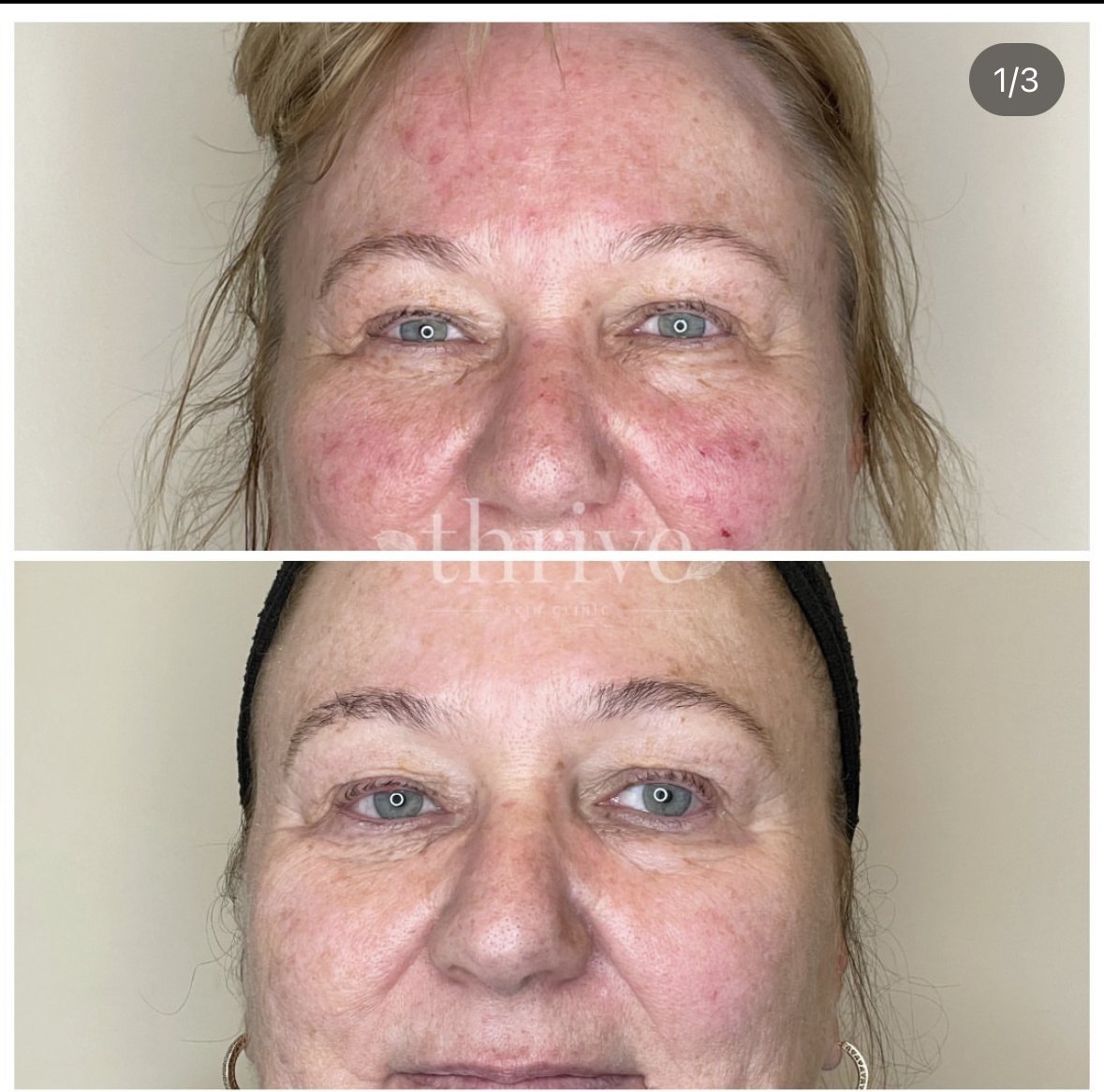
Medical treatment and IPL. Results are specific to this patient and vary between patients.
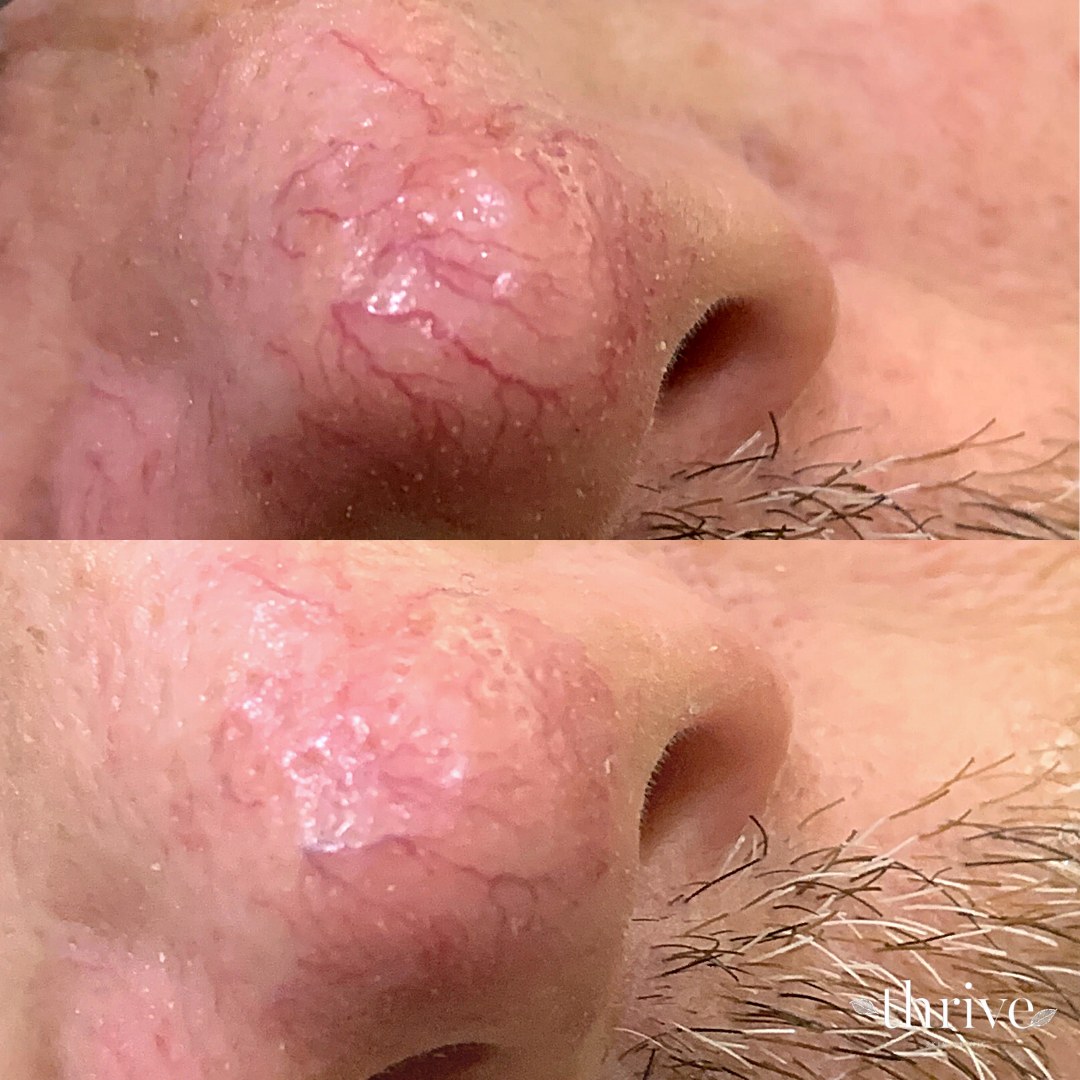
Vascular laser to target telangiectasia (photo taken immediately after treatment). Results are specific to this patient and vary between patients.
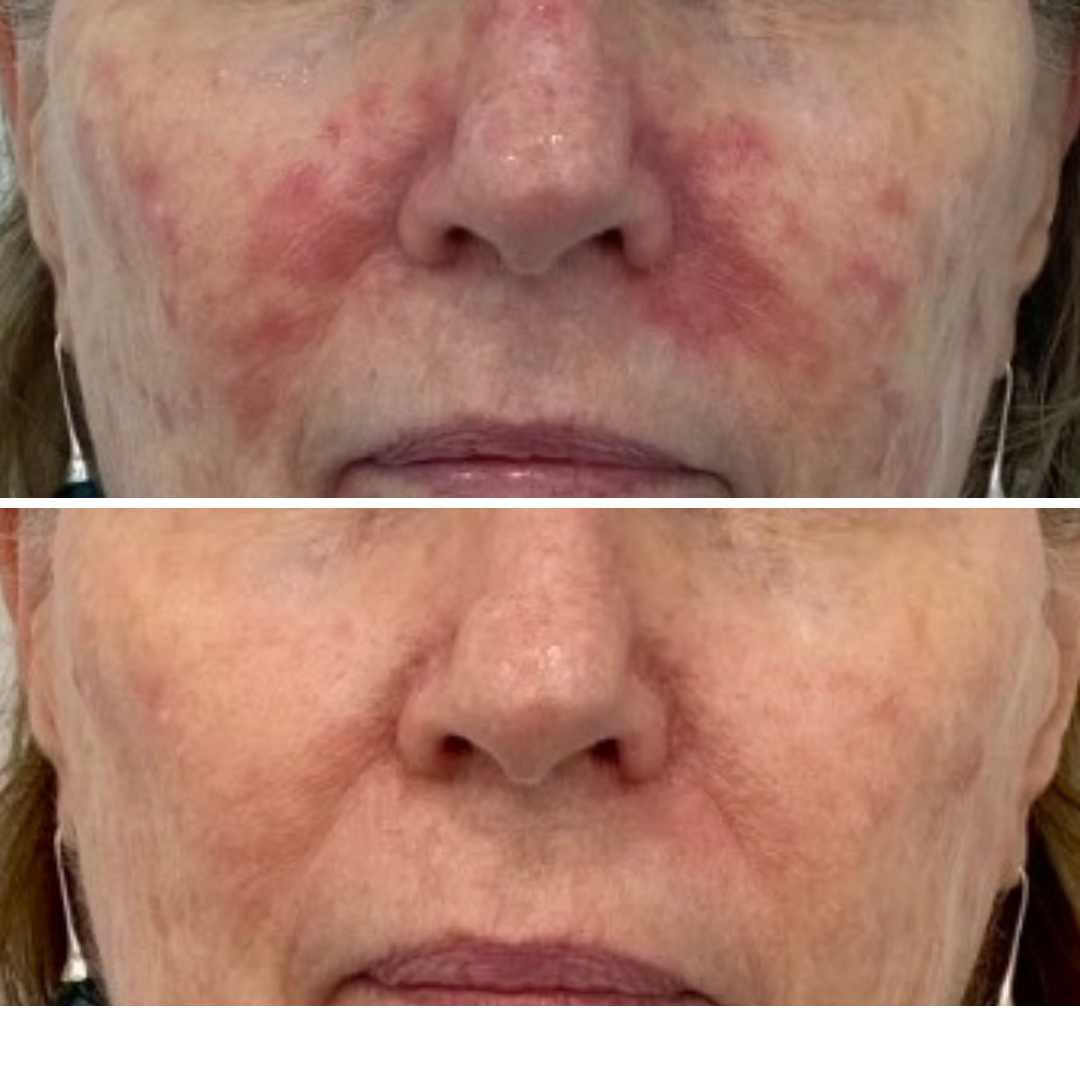
Medical treatment and 2 sessions of Excel V vascular laser. Results are specific to this patient and vary between patients.